


What’s your favorite book that nobody else has heard of? You know, not Little Women or Huckleberry Finn, not the latest best-seller . . . whether they’ve read them or not, everybody “knows” those books. I’m talking about the best book that, when you tell people that you love it, they go, “Huh? Never heard of it?”
And, folks–Becca was nice enough to nominate Booking Through Thursday for a Blogger’s Choice Award–while you’re here, why don’t you head over and vote for us, too. Because, a vote for BTT is a vote for all of us who play each week!
The first little-known books that came to mind is a cozy-mystery series by Heron Carvic, the first of which is Picture Miss Seeton. Longtime readers may recall my mentioning this series in the past. The original five books feature a dear, charming lead character, the eponymous Miss Seeton. She is an art teacher who inherits a home in a tiny, English village of the sort that seems to attract murderers and eccentrics by the dozen. Ah, but Miss Seeton is more than a match for the evildoers in this village owing to her psychically-influenced artistic abilities. She simultaneously confounds and assists local policemen, Inspector Delphic and Bob Ranger, in solving and preventing murders and assorted mayhem while often skating on thin ice herself.
Many further adventures of Miss Seeton were written by Hamilton Carver after Heron Carvic's death, but the original books will do for me, and no others. These are not police procedurals, but merry books starring an endearing character backed up by other solid characters who complement and contrast Miss Seeton. These books are light reading, just the thing
for a short plane trip, a winter's afternoon or other time when you want to "munch" on some reading without feeling too full.
(submitted by Moon Rani)
Friday, January 25, 2008

Friday, January 18, 2008
"Booking Through Thursday"
"This week’s question is suggested by Puss Reboots:
How much do reviews (good and bad) affect your choice of reading? If you see a bad review of a book you wanted to read, do you still read it? If you see a good review of a book you’re sure you won’t like, do you change your mind and give the book a try?"
I use reviews as tools to help me decide what to read. But I don't allow the reviews to do all the work for me. Reviews are useful in learning the general plotlines in books. There are times when I thought I knew a book's topic but was completely wrong. I would rather find that out before getting the book. and wasting my time.
Even bad reviews are helpful. One reviewer may hate a book for all the reasons I would love it. Or a bad review might dampen my enthusiasm, it's true, and cause me to look elsewhere, but again that's helpful in not wasting my time.
Correspondingly a good review might make me consider reading a book that I would not pick up on my own, but only "might." Reviews can help me avoid or include books in my reading time.
Life is too short to read bad books.
(submitted by Moon Rani)
How much do reviews (good and bad) affect your choice of reading? If you see a bad review of a book you wanted to read, do you still read it? If you see a good review of a book you’re sure you won’t like, do you change your mind and give the book a try?"
I use reviews as tools to help me decide what to read. But I don't allow the reviews to do all the work for me. Reviews are useful in learning the general plotlines in books. There are times when I thought I knew a book's topic but was completely wrong. I would rather find that out before getting the book. and wasting my time.
Even bad reviews are helpful. One reviewer may hate a book for all the reasons I would love it. Or a bad review might dampen my enthusiasm, it's true, and cause me to look elsewhere, but again that's helpful in not wasting my time.
Correspondingly a good review might make me consider reading a book that I would not pick up on my own, but only "might." Reviews can help me avoid or include books in my reading time.
Life is too short to read bad books.
(submitted by Moon Rani)
Sunday, January 13, 2008
My favorite winter reading
Winter, in the colder climes, brings the perfect opportunity to shutter oneself indoors with thick books and many cups of hot tea. Let the weather outside be frightful; the outside really is delightful when ensconced in a warm corner, surrounded by tea and books.
Yet my favorite winter reading comes from no book at all. It comes in paper, yes, and all in black ink on white pages, and it is nonfiction. What brings me the greatest joy in January is curling up with this year's newly-arrived garden catalogue.
I have only one catalogue, having summoned the strength to resist the siren call of the obscenely gorgeous color offerings from seed companies all over the country. My choice comes from www.bountifulgardens.org. This California company specializes in offering heirloom seeds and seeds for plants that are suitable for saving to plant next year. They teach biointensive gardening, getting the most from the least, one might say. The Bountiful Gardens people have taught and continue to teach people from all over the world how to get the best and greatest yields from small, formerly unsuitable spaces. They have countless success stories, too. The catalogue offers books, seeds, implements and much more.
I fell in love with gardening last year, although my efforts are somewhat limited. I pass glum and grey winter days by poring over the catalogue and fantasizing about what this year's warm seasons shall bring.
(submitted by Moon Rani)
Yet my favorite winter reading comes from no book at all. It comes in paper, yes, and all in black ink on white pages, and it is nonfiction. What brings me the greatest joy in January is curling up with this year's newly-arrived garden catalogue.
I have only one catalogue, having summoned the strength to resist the siren call of the obscenely gorgeous color offerings from seed companies all over the country. My choice comes from www.bountifulgardens.org. This California company specializes in offering heirloom seeds and seeds for plants that are suitable for saving to plant next year. They teach biointensive gardening, getting the most from the least, one might say. The Bountiful Gardens people have taught and continue to teach people from all over the world how to get the best and greatest yields from small, formerly unsuitable spaces. They have countless success stories, too. The catalogue offers books, seeds, implements and much more.
I fell in love with gardening last year, although my efforts are somewhat limited. I pass glum and grey winter days by poring over the catalogue and fantasizing about what this year's warm seasons shall bring.
(submitted by Moon Rani)
Tuesday, January 01, 2008
Words for the new year
"New Year's Day: Now is the accepted time to make your regular annual good resolutions. Next week you can begin paving hell with them as usual." ~Mark Twain
"The merry year is born
Like the bright berry from the naked thorn."~Hartley Coleridge
"Year's end is neither an end nor a beginning but a going on, with all the wisdom that experience can instill in us." ~Hal Borland
"And ye, who have met with Adversity's blast,
And been bow'd to the earth by its fury;
To whom the Twelve Months, that have recently pass'd
Were as harsh as a prejudiced jury -
Still, fill to the Future! and join in our chime,
The regrets of remembrance to cozen,
And having obtained a New Trial of Time,
Shout in hopes of a kindlier dozen."~Thomas Hood
(submitted by Moon Rani)
"The merry year is born
Like the bright berry from the naked thorn."~Hartley Coleridge
"Year's end is neither an end nor a beginning but a going on, with all the wisdom that experience can instill in us." ~Hal Borland
"And ye, who have met with Adversity's blast,
And been bow'd to the earth by its fury;
To whom the Twelve Months, that have recently pass'd
Were as harsh as a prejudiced jury -
Still, fill to the Future! and join in our chime,
The regrets of remembrance to cozen,
And having obtained a New Trial of Time,
Shout in hopes of a kindlier dozen."~Thomas Hood
(submitted by Moon Rani)
Monday, December 31, 2007
"The Sky is Low"
Submitted for your reading pleasure, this Emily Dickinson poem of winter...
The sky is low, the clouds are mean,
A travelling flake of snow
Across a barn or through a rut
Debates if it will go.
A narrow wind complains all day
How some one treated him;
Nature, like us, is sometimes caught
Without her diadem.
(submitted by Moon Rani)
The sky is low, the clouds are mean,
A travelling flake of snow
Across a barn or through a rut
Debates if it will go.
A narrow wind complains all day
How some one treated him;
Nature, like us, is sometimes caught
Without her diadem.
(submitted by Moon Rani)
A Christmas Carol
It's not mid-winter, I know. Why, winter is still in its infancy. But this poem, by Christina Georgina Rosetti, is so nice that I couldn't resist sharing it here. It's a well-known hymn set to a number of musical settings. The best-known setting is probably the one by Gustav Holst. The last stanza is likely the most widely recognized and, arguably, the best loved. But the first stanza is the prettiest or, at least, the most "sense-itive" so to speak. It's just the way winter feels for most of the world.
It may seem too late for a Christmas carol, but Christmas lasts until 6.January (the twelve days of Christmas) for Western churches while the Eastern rite churches have yet to celebrate it.
On a personal note, I have enjoyed the poetry of CGR since I was a schoolgirl.
In the bleak midwinter
Frosty wind made moan,
Earth stood hard as iron,
Water like a stone;
Snow had fallen,
Snow on snow,
Snow on snow,
In the bleak midwinter,
Long ago.
Our God, heaven cannot hold him,
Nor earth sustain;
Heaven and earth shall flee away
When he comes to reign;
In the bleak midwinter
A stable place sufficed
The Lord God incarnate,
Jesus Christ.
Enough for him, whom Cherubim
Worship night and day
A breast full of milk
And a manger full of hay.
Enough for him, whom angels
Fall down before,
The ox and ass and camel
which adore.
Angels and archangels
May have gathered there,
Cherubim and seraphim
Thronged the air;
But his mother only,
In her maiden bliss,
Worshipped the Beloved
With a kiss.
What can I give him,
Poor as I am?
If I were a shepherd
I would bring a lamb,
If I were a wise man
I would do my part,
Yet what I can I give Him —
Give my heart.
(submitted by Moon Rani)
It may seem too late for a Christmas carol, but Christmas lasts until 6.January (the twelve days of Christmas) for Western churches while the Eastern rite churches have yet to celebrate it.
On a personal note, I have enjoyed the poetry of CGR since I was a schoolgirl.
In the bleak midwinter
Frosty wind made moan,
Earth stood hard as iron,
Water like a stone;
Snow had fallen,
Snow on snow,
Snow on snow,
In the bleak midwinter,
Long ago.
Our God, heaven cannot hold him,
Nor earth sustain;
Heaven and earth shall flee away
When he comes to reign;
In the bleak midwinter
A stable place sufficed
The Lord God incarnate,
Jesus Christ.
Enough for him, whom Cherubim
Worship night and day
A breast full of milk
And a manger full of hay.
Enough for him, whom angels
Fall down before,
The ox and ass and camel
which adore.
Angels and archangels
May have gathered there,
Cherubim and seraphim
Thronged the air;
But his mother only,
In her maiden bliss,
Worshipped the Beloved
With a kiss.
What can I give him,
Poor as I am?
If I were a shepherd
I would bring a lamb,
If I were a wise man
I would do my part,
Yet what I can I give Him —
Give my heart.
(submitted by Moon Rani)
Sunday, December 30, 2007
Looking to the new year
Is there a book you meant to read this year but never got around to reading? Maybe there's a book like that you've intended for years to read. Here is my sole resolution for the new year: I shall dive into the book I've meant to read since 2006, The Educated Mind: A Guide to the Classical Education You Never Had, by Susan Wise Bauer. At last I'll embark on that plan to further my self-education. Other books came on the scene later but clamored until I read them first. Now I'll make time to read The Educated Mind. And here's hoping I'll get the education I so need!
While it's still available, do try Celestial Seasonings' Sugar Cookie Sleigh Ride Holiday Herb Tea. It's packed with so much flavor I almost bit into the first sip! Let the snowflakes swirl while you sip this tisane through all your winter reading.
(submitted by Moon Rani)
While it's still available, do try Celestial Seasonings' Sugar Cookie Sleigh Ride Holiday Herb Tea. It's packed with so much flavor I almost bit into the first sip! Let the snowflakes swirl while you sip this tisane through all your winter reading.
(submitted by Moon Rani)
Thursday, December 20, 2007
Reading to relax
This time of year is busy for most folks, from holiday preparations to end-of-year work projects to goodness-knows-what-all. When I need a break, I usually check several blogs and sites which never fail to cheer me and make me feel more at ease. Being an animal lover, my tastes run to blogs about creatures. Take a look at any of these when your pace is hectic.
www.dailykitten.com
www.dailypuppy.com
www.stuffonmycat.com
www.stuffonmymutt.com
www.dailycoyote.blogspot.com
www.rollingdogranch.org (follow the link at the bottom to their blog)
www.onehotstove.blogspot.com (a vegetarian cooking blog)
(submitted by Moon Rani)
www.dailykitten.com
www.dailypuppy.com
www.stuffonmycat.com
www.stuffonmymutt.com
www.dailycoyote.blogspot.com
www.rollingdogranch.org (follow the link at the bottom to their blog)
www.onehotstove.blogspot.com (a vegetarian cooking blog)
(submitted by Moon Rani)
Friday, December 14, 2007
Two spamkus
[I am the spamku inventor. Spamkus are, of course, haikus made from spam subject lines. ]
12 bottles of Fine
Wine for just $4.99:
a happy present.
Do not feel shy of
you male machine size. Make it
a Whopping Special!
(submitted by Moon Rani)
12 bottles of Fine
Wine for just $4.99:
a happy present.
Do not feel shy of
you male machine size. Make it
a Whopping Special!
(submitted by Moon Rani)
Thursday, December 06, 2007
Booking through Thursday
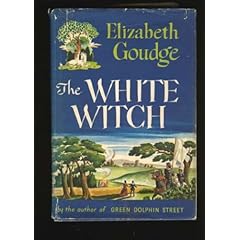 Do you have a favourite book, now out of print, that you would like to see become available again?
The White Witch, by Elizabeth Goudge. I've been reading this book (almost) yearly since I was sixteen, and it never has lost its magic. Goude's writing style is simultaneously descriptive and spare, conjuring the intimacy of half-gypsy Froniga's herb-filled cottage, as well as the violent world during the time of Cromwell. To this day, the scent of rose or lavender brings me back to the first time I read the book, and I imagine myself in another life, creating rose-petal conserve, perhaps - melanie
Season's readings
Do you have a favorite thing to read or to hear read at a certain time every year? From early childhood my annual favorite was the Christmas story found in the book Luke. I never minded whether I heard it or read it myself; I liked both. I loved it from Advent throughout the twelve days of Christmas. Nowadays, though I still love that account of Jesus' birth, I prefer hearing and reading the opening chapter of the book of John, my favorite gospel account.
A couple of years ago, I attended a party in early December. It was give by a couple who lived in a home decorated in opulent, Victorian style with modern touches plus original art from local artists. I remember seeing golden cherubs holding up lush draperies in the front room, and a Christmas tree covered in handmade ornaments, among other things. The whole house glowed.
The focal point of the evening was gathering in that front room to hear the host read Truman Capote's "A Christmas Memory." He said it was a personal tradition from when he lived in Virginia, and that he loved continuing it in his new home. The story is always entertaining and always very touching. The company was a pleasant mix of disparate types. After the reading we trotted into the dining room for rich fruitcake that had been shot full of corn liquor and "resting" for a year or so. I remember candlelight and decorations and laughter.
Wouldn't it be fun to have such a tradition? One could add a reading of Dylan Thomas' "A Child's Christmas in Wales" for fun.
(submitted by Moon Rani)
A couple of years ago, I attended a party in early December. It was give by a couple who lived in a home decorated in opulent, Victorian style with modern touches plus original art from local artists. I remember seeing golden cherubs holding up lush draperies in the front room, and a Christmas tree covered in handmade ornaments, among other things. The whole house glowed.
The focal point of the evening was gathering in that front room to hear the host read Truman Capote's "A Christmas Memory." He said it was a personal tradition from when he lived in Virginia, and that he loved continuing it in his new home. The story is always entertaining and always very touching. The company was a pleasant mix of disparate types. After the reading we trotted into the dining room for rich fruitcake that had been shot full of corn liquor and "resting" for a year or so. I remember candlelight and decorations and laughter.
Wouldn't it be fun to have such a tradition? One could add a reading of Dylan Thomas' "A Child's Christmas in Wales" for fun.
(submitted by Moon Rani)
Thursday, November 29, 2007
My meme
I made up a meme.
Using your first initial to begin each answer, list:
a favorite author
a favorite character in literature (with source)
a favorite book
a favorite topic in fiction
a favorite location in fiction (can be real place so long as it's used in fiction)
a favorite place or time to read
(bonus) a favorite word
My answers, using my given name, not my screen name:
Lovecraft (at one time)
Lysistrata, from the eponymous play by Aristophanes
Little Black Sambo
Life with animals (e.g. - - in books by James Herriott and others)
London
Lazy days, lounging in bed
Lightning! (I love its combination of tremendous power and tremendous beauty)
Everyone is welcome to answer this meme, too.
(submitted by Moon Rani)
Using your first initial to begin each answer, list:
a favorite author
a favorite character in literature (with source)
a favorite book
a favorite topic in fiction
a favorite location in fiction (can be real place so long as it's used in fiction)
a favorite place or time to read
(bonus) a favorite word
My answers, using my given name, not my screen name:
Lovecraft (at one time)
Lysistrata, from the eponymous play by Aristophanes
Little Black Sambo
Life with animals (e.g. - - in books by James Herriott and others)
London
Lazy days, lounging in bed
Lightning! (I love its combination of tremendous power and tremendous beauty)
Everyone is welcome to answer this meme, too.
(submitted by Moon Rani)
Monday, November 19, 2007
Books into movies - take 2
What book would I most want to see filmed? The Ladies, a novel by Doris Grumbach. I've wondered often why it never was filmed. It's such a good story!
In the late 18th century, two Irish women decided to leave their family homes and create a life for themselves in the wider world. Sarah, an orphaned teenager, met Eleanor while on holiday from school. Eleanor, a woman in her thirties whose father had never forgiven her for being a daughter instead of the son he longed for, had dressed as a man from childhood and had enjoyed the kind of freedom that few traditional women could imagine. They became dear friends and companions, and their friendship was considered salutary by their families - until they eloped.
Lesbian love, even (and especially) loving relationships that were true marriages of hearts, minds, and bodies, shocked the families into allowing Sarah and Eleanor to leave their homes. They never returned. Instead, they established themselves in a small Welsh town, Llangollen, where they lived according to their own vows and beliefs. That their love was as natural as any was their first vow of binding. They vowed to create a beautiful home with bountiful gardens to sustain them, and to read and study to develop their minds and hearts.
Dressed in the riding habits and top hats that Eleanor designed as their lifelong fashion, they lived a solitary life in the puzzled town, and refused to allow themselves to be sensationalized when they attracted notice. Gradually, they received the visitors who would make them famous - Wordsworth, Byron, Walter Scott, Edmund Burke, Richard Shackleton, Josiah Wedgewood, and Anna Seward, amongst others. They grew old together, and they died together; their love never faltered.
Now, imagine the movie! Since there will be no more Merchant/Ivory productions, I would like Jane Campion to direct because of her skill in depicting women who make brave and difficult choices amidst natural or social beauty. (Think "The Piano" or "Portrait of a Lady," and imagine the Ladies against the expanses of rural Wales.) Picture Sarah's resplendent gardens, the house that the Ladies decorated, and the immense bed they shared; picture their beloved cow and the artichokes they feasted on with freshly-churned butter. The movie would be a visual treat.
Emma Thompson might be a good choice for the older, more assertive Eleanor. I can imagine Kate Winslett as Sarah, blonde and emotional, comforting Eleanor through her monthly migraines, knitting delicate stockings and gloves, and designing the gardens that would be so admired. Who would portray their famous friends? I'll leave that to you,the casting director, although I might suggest Anthony Hopkins as Sir Walter Scott, and (dare I say) Hugh Laurie as Lord Byron.
Perhaps you are puzzled, wondering why real-life luminaries are including in this fiction. Simple: Doris Grumbach's novel is a fictionalized biography of two very real, very brave women: Sarah Ponsonby and Eleanor Butler, the Ladies of Llangollen. Did Sarah suffer from debilitating dreams and lingering guilt about her sexual preference? Did Eleanor develop a passion for magic in her later years? Grumbach cautions the reader to remember that her book is fiction, her own vision, and not a faithful biography. I think it would make a splendid film, and I recommend the book as a fine romance and a vision of the lives of two pioneering women.
melanie
In the late 18th century, two Irish women decided to leave their family homes and create a life for themselves in the wider world. Sarah, an orphaned teenager, met Eleanor while on holiday from school. Eleanor, a woman in her thirties whose father had never forgiven her for being a daughter instead of the son he longed for, had dressed as a man from childhood and had enjoyed the kind of freedom that few traditional women could imagine. They became dear friends and companions, and their friendship was considered salutary by their families - until they eloped.
Lesbian love, even (and especially) loving relationships that were true marriages of hearts, minds, and bodies, shocked the families into allowing Sarah and Eleanor to leave their homes. They never returned. Instead, they established themselves in a small Welsh town, Llangollen, where they lived according to their own vows and beliefs. That their love was as natural as any was their first vow of binding. They vowed to create a beautiful home with bountiful gardens to sustain them, and to read and study to develop their minds and hearts.
Dressed in the riding habits and top hats that Eleanor designed as their lifelong fashion, they lived a solitary life in the puzzled town, and refused to allow themselves to be sensationalized when they attracted notice. Gradually, they received the visitors who would make them famous - Wordsworth, Byron, Walter Scott, Edmund Burke, Richard Shackleton, Josiah Wedgewood, and Anna Seward, amongst others. They grew old together, and they died together; their love never faltered.
Now, imagine the movie! Since there will be no more Merchant/Ivory productions, I would like Jane Campion to direct because of her skill in depicting women who make brave and difficult choices amidst natural or social beauty. (Think "The Piano" or "Portrait of a Lady," and imagine the Ladies against the expanses of rural Wales.) Picture Sarah's resplendent gardens, the house that the Ladies decorated, and the immense bed they shared; picture their beloved cow and the artichokes they feasted on with freshly-churned butter. The movie would be a visual treat.
Emma Thompson might be a good choice for the older, more assertive Eleanor. I can imagine Kate Winslett as Sarah, blonde and emotional, comforting Eleanor through her monthly migraines, knitting delicate stockings and gloves, and designing the gardens that would be so admired. Who would portray their famous friends? I'll leave that to you,the casting director, although I might suggest Anthony Hopkins as Sir Walter Scott, and (dare I say) Hugh Laurie as Lord Byron.
Perhaps you are puzzled, wondering why real-life luminaries are including in this fiction. Simple: Doris Grumbach's novel is a fictionalized biography of two very real, very brave women: Sarah Ponsonby and Eleanor Butler, the Ladies of Llangollen. Did Sarah suffer from debilitating dreams and lingering guilt about her sexual preference? Did Eleanor develop a passion for magic in her later years? Grumbach cautions the reader to remember that her book is fiction, her own vision, and not a faithful biography. I think it would make a splendid film, and I recommend the book as a fine romance and a vision of the lives of two pioneering women.
melanie
Saturday, November 17, 2007
Books into movies, take #1
Do you picture all the action in book as you read? I do; always have. Sometimes a book leaves me simply panting for a film version, despite Hollywood's mostly miserable track record in doing this.
So let's imagine that it's possible to have a perfect screen adaptation of a terrific book. And let's also imagine that all the casting, directing, costuming, scoring and other production choices are ours, all ours. Which book would you choose?
This is a tough one because I can think of so many answers. But as I pondered this question today, the first book that came to mind was...the Biblical Book of Esther. The setting is in and around the ancient kingdom of Ahasuerus (Xerxes I), about 485-464 B.C. King Ahasueru lived in a fabulous, fortified palace furnished with linen, precious metals, black marble, white marble, alabaster, turquoise and more. He was served on golden vessels. I can just see what is called "the riches of his glorious kingdom and the splendor of his excellent majesty!"
Queen Vashti wasn't interested in her king, so a beauty contest was ordered to find her replacement Imagine all the pageantry there must have been in that contest! We're told that "beauty preparations" were given the young women, and that it took them twelve whole months to prepare for the competition.
The intrigue and suspense begin when beautiful Esther, a Hebrew woman, enters the contest at her uncle's urging. King Ahasuerus is not Hebrew, and Mordecai, Esther's uncle, tells her to keep mum about her heritage for the time being. Mordecai and Esther team up to save the king from a deadly plot on his life. She rises high in the king's estimation.
Enter wicked Haman, a treacherous and conniving man who breathes blood and murder against the Hebrews. Haman puts into motion a plot against them, setting up the king to make a decree that keeps Haman's hands clean yet will, if accomplished, result in all-out genocide.
What happens next to everyone is familiar to everyone who celebrates Purim and to all who remember their Bible history. Some of the characters shall rise and one shall fall in a particular stroke of poetic justice.
What a story - - it has everything! There is opulence, intrigue, romance, action and suspense, outrage and satisfaction, fascinating and fully-rounded characters plus an ending that delivers just deserts to one and all - - everything that plays well on the big screen.
Now let's see, whom do I want to play the leads...?
(submitted by Moon Rani)
So let's imagine that it's possible to have a perfect screen adaptation of a terrific book. And let's also imagine that all the casting, directing, costuming, scoring and other production choices are ours, all ours. Which book would you choose?
This is a tough one because I can think of so many answers. But as I pondered this question today, the first book that came to mind was...the Biblical Book of Esther. The setting is in and around the ancient kingdom of Ahasuerus (Xerxes I), about 485-464 B.C. King Ahasueru lived in a fabulous, fortified palace furnished with linen, precious metals, black marble, white marble, alabaster, turquoise and more. He was served on golden vessels. I can just see what is called "the riches of his glorious kingdom and the splendor of his excellent majesty!"
Queen Vashti wasn't interested in her king, so a beauty contest was ordered to find her replacement Imagine all the pageantry there must have been in that contest! We're told that "beauty preparations" were given the young women, and that it took them twelve whole months to prepare for the competition.
The intrigue and suspense begin when beautiful Esther, a Hebrew woman, enters the contest at her uncle's urging. King Ahasuerus is not Hebrew, and Mordecai, Esther's uncle, tells her to keep mum about her heritage for the time being. Mordecai and Esther team up to save the king from a deadly plot on his life. She rises high in the king's estimation.
Enter wicked Haman, a treacherous and conniving man who breathes blood and murder against the Hebrews. Haman puts into motion a plot against them, setting up the king to make a decree that keeps Haman's hands clean yet will, if accomplished, result in all-out genocide.
What happens next to everyone is familiar to everyone who celebrates Purim and to all who remember their Bible history. Some of the characters shall rise and one shall fall in a particular stroke of poetic justice.
What a story - - it has everything! There is opulence, intrigue, romance, action and suspense, outrage and satisfaction, fascinating and fully-rounded characters plus an ending that delivers just deserts to one and all - - everything that plays well on the big screen.
Now let's see, whom do I want to play the leads...?
(submitted by Moon Rani)
Friday, November 16, 2007
Halp!
Iz bin tagged! [Does it show that I've been at www.icanhascheezburger.com ?]
TeaBird tagged me for a meme. I am to open the book I am reading, turn to page 161, and read the fifth sentence. After I share it with you, dear reader, I am to tag five other bloggers.
I am reading What Went Wrong? The Clash Between Islam and Modernity in the Middle East, by Bernard Lewis. The book itself concludes at page 160, but there is an author's note on 161: "My thanks are due to the organizers of these various events for giving me the opportunity to formulate my views and put them before an informed audience."
Ah, now comes the hard part; finding five other bloggers! I know only one, and that's Diane at www.kurrajonghandcrafts.com/blog . You're it, Diane!
(submitted by Moon Rani)
TeaBird tagged me for a meme. I am to open the book I am reading, turn to page 161, and read the fifth sentence. After I share it with you, dear reader, I am to tag five other bloggers.
I am reading What Went Wrong? The Clash Between Islam and Modernity in the Middle East, by Bernard Lewis. The book itself concludes at page 160, but there is an author's note on 161: "My thanks are due to the organizers of these various events for giving me the opportunity to formulate my views and put them before an informed audience."
Ah, now comes the hard part; finding five other bloggers! I know only one, and that's Diane at www.kurrajonghandcrafts.com/blog . You're it, Diane!
(submitted by Moon Rani)
Thursday, November 08, 2007
Booking through Thursday
Would you say that you read about the same amount now as when you were younger? More? Less? Why?
When I first read this question, I wondered...My goodness, how can I quantify my reading? Is "reading more" equal to finishing more books? Spending more time reading? Reading fatter books? Finishing more books?
I've always been a voracious and indelicate reader. I'll read almost anything except (and sorry, I don't mean to be a snob here, I just can't get into...) romances (and that says more about me than about the genre, trust me). I go through binges where I'll read nothing but biographies, or nothing but an entire series of paperback mysteries, or the entire works of Barbara Pym (for the 18th time, at least). Other times, I'll read poetry, or go through art books, or read Barbara Walker's stitch dictionaries as if they were cookbooks. (Actually, I don't read cookbooks. I don't cook.) I'll read Wilkie Collins, Stephen King (love his book on writing!), Charles de Lint, Alfred Bester, Louisa May Alcott...
Is this more or less than I read when I was younger? Well, obviously, I have a full-time job, and a full-time house, and a full-time husband... so I have less time to read. That doesn't mean I read less, and it doesn't mean that I don't get as engrossed in a book as I once did. If anything, I appreciate the time I grab for reading, knitting, and writing letters more than when I was young. (I appreciate everything more now, but that's another post.)
I think that's my answer. I can't really quantify whether I read more or less, but I appreciate my reading and time more.
melanie
When I first read this question, I wondered...My goodness, how can I quantify my reading? Is "reading more" equal to finishing more books? Spending more time reading? Reading fatter books? Finishing more books?
I've always been a voracious and indelicate reader. I'll read almost anything except (and sorry, I don't mean to be a snob here, I just can't get into...) romances (and that says more about me than about the genre, trust me). I go through binges where I'll read nothing but biographies, or nothing but an entire series of paperback mysteries, or the entire works of Barbara Pym (for the 18th time, at least). Other times, I'll read poetry, or go through art books, or read Barbara Walker's stitch dictionaries as if they were cookbooks. (Actually, I don't read cookbooks. I don't cook.) I'll read Wilkie Collins, Stephen King (love his book on writing!), Charles de Lint, Alfred Bester, Louisa May Alcott...
Is this more or less than I read when I was younger? Well, obviously, I have a full-time job, and a full-time house, and a full-time husband... so I have less time to read. That doesn't mean I read less, and it doesn't mean that I don't get as engrossed in a book as I once did. If anything, I appreciate the time I grab for reading, knitting, and writing letters more than when I was young. (I appreciate everything more now, but that's another post.)
I think that's my answer. I can't really quantify whether I read more or less, but I appreciate my reading and time more.
melanie
Thursday, November 01, 2007
"Booking Through Thursday"
Oh, Horror! What with yesterday being Halloween, and all . . . do you read horror? Stories of things that go bump in the night and keep you from sleeping?
Ah, adolescence, when nothing seems too scary or horrible! I read the scariest books I could get my greedy, little hands on then; I devoured Poe and I swallowed Lovecraft whole. This was during a period when I was fascinated by the rogues galleries and chambers of horrors in wax museums, too.
During most of my adulthood so far, I eschewed horror fiction in favor of true crime and murder mysteries. I threw out only one true crime book that was too much for me, and read as many of the rest as I could. I read some Stephen King, but I found myself disappointed by his writing every time. He has a gift for telling stories, but I don't like the stories he tells. I quit reading his works after Cujo and some short story collection of his. I am still baffled by those who enjoy reading about eating oneself or haunted cars or things to do with dead children and other unsavory topics. I guess I had a few standards during my horror reading days
During this autumn, however, I realize that I cannot tolerate that kind of books anymore. I find them incompatible with a truly dedicated Christian life. I also find them depressing to the point of despair. I am reminded of the computer anacronym, GIGO: garbage in, garbage out. It's much harder to maintain an upbeat attitude when I fill my head with horror, true or otherwise.
I was also a decided fan of the mystery novel, but I quit reading fiction a couple of years ago; it wasn't deliberate, it was just that my tastes lay elsewhere. I still enjoy the grand, old masters of mystery - - Sayers, Christie, Marsh and others of their kind for their craft in writing.
As for all-out horror, however, no I've not read anything in that genre in decades. You know what? I don't miss it.
(submitted by Moon Rani)
Ah, adolescence, when nothing seems too scary or horrible! I read the scariest books I could get my greedy, little hands on then; I devoured Poe and I swallowed Lovecraft whole. This was during a period when I was fascinated by the rogues galleries and chambers of horrors in wax museums, too.
During most of my adulthood so far, I eschewed horror fiction in favor of true crime and murder mysteries. I threw out only one true crime book that was too much for me, and read as many of the rest as I could. I read some Stephen King, but I found myself disappointed by his writing every time. He has a gift for telling stories, but I don't like the stories he tells. I quit reading his works after Cujo and some short story collection of his. I am still baffled by those who enjoy reading about eating oneself or haunted cars or things to do with dead children and other unsavory topics. I guess I had a few standards during my horror reading days
During this autumn, however, I realize that I cannot tolerate that kind of books anymore. I find them incompatible with a truly dedicated Christian life. I also find them depressing to the point of despair. I am reminded of the computer anacronym, GIGO: garbage in, garbage out. It's much harder to maintain an upbeat attitude when I fill my head with horror, true or otherwise.
I was also a decided fan of the mystery novel, but I quit reading fiction a couple of years ago; it wasn't deliberate, it was just that my tastes lay elsewhere. I still enjoy the grand, old masters of mystery - - Sayers, Christie, Marsh and others of their kind for their craft in writing.
As for all-out horror, however, no I've not read anything in that genre in decades. You know what? I don't miss it.
(submitted by Moon Rani)
Thursday, October 25, 2007
Booking through Thursday
This week's question:
The book that comes to mind: Jonathan Franzen's The Corrections. I became interested in it when Oprah announced it.
And dislike it I did - on its lack of merit. I got through, maybe, 70 pages before I chucked it. I hated every character, I didn't care about what they were doing or where, and I found myself thinking that Franzen should have been very grateful indeed to have had such mass exposure.
melanie
- I would enjoy reading a meme about people’s abandoned books. The books that you start but don’t finish say as much about you as the ones you actually read, sometimes because of the books themselves or because of the circumstances that prevent you from finishing. So . . . what books have you abandoned and why?
The book that comes to mind: Jonathan Franzen's The Corrections. I became interested in it when Oprah announced it.
- No, I do not read all of Oprah's books. I don't even like Oprah. In fact, sometimes I really dislike Oprah. But that's another story. Oprah has chosen some fine books. The Reader, for example, and We Were the Mulvaneys. I read the translation of Anna Karenina she chose because it had been years since I'd read AK and I wanted to experience her through a newer sensibility than Constance Garnett's.
And dislike it I did - on its lack of merit. I got through, maybe, 70 pages before I chucked it. I hated every character, I didn't care about what they were doing or where, and I found myself thinking that Franzen should have been very grateful indeed to have had such mass exposure.
melanie
Tuesday, October 23, 2007
"Happyness," and the pursuit thereof
Becoming homeless frightens me. Those who live without homes and those who used to do so amaze me. It is hard for me to imagine forging ahead with life in the face of such a circumstance, never mind going on to overcome it and to found a multimillion-dollar firm. But that is what Chris Gardner, founder of Gardner Rich & Company, did. The Pursuit of Happyness is Mr. Gardner's memoir of his rise from a poor childhood with a brutal stepfather and loving but defeated mother through his colorful adulthood, through his year of living homeless with a young son, and onward to his eventual triumph as a stockbroker and founder of a brokerage firm. Mr. Gardner, along with ghostwriter Quincy Troupe, do not flinch in relating the most heart-wrenching details of Mr. Gardner's life, not even when his choices are poor in the extreme.
Mr. Gardner's story of abandonment, deprivation and brutality during childhood is far from uncommon. But what saved him from becoming another heartbreaking failure? A combination of his mother's love and encouragement combined with his own intellectual superiority and curiosity plus some extremely lucky breaks drove him, as did his ability to see potential in opportunities, and his ability to focus on what he wanted.
Mr. Gardner's lack of a loving father-figure during childhood made him an intensely involved father to his own son, even when that meant a year of homelessness with his little boy. There were no dramatic resolutions to their living status, rather a long, gradual ascent that came from very hard work and sacrifice. Mr. Gardner thanks San Francisco's Glide Memorial Church for much of his rise to success. In fact, he is an active partner with that church even now, sponsoring the church's continuing commitment to those who live on the edge.
Mr. Gardner's riveting story is told in his own words, the language of the streets. I'm not a fan of such language, but this story was so compelling that I stayed with it. I like stories of people who rise above their circumstances, becoming victors, not victims, thus I am glad I read The Pursuit of Happyness.
Oh, and when you read this book, you'll find out why "happiness" is misspelled.
(submitted by Moon Rani)
Mr. Gardner's story of abandonment, deprivation and brutality during childhood is far from uncommon. But what saved him from becoming another heartbreaking failure? A combination of his mother's love and encouragement combined with his own intellectual superiority and curiosity plus some extremely lucky breaks drove him, as did his ability to see potential in opportunities, and his ability to focus on what he wanted.
Mr. Gardner's lack of a loving father-figure during childhood made him an intensely involved father to his own son, even when that meant a year of homelessness with his little boy. There were no dramatic resolutions to their living status, rather a long, gradual ascent that came from very hard work and sacrifice. Mr. Gardner thanks San Francisco's Glide Memorial Church for much of his rise to success. In fact, he is an active partner with that church even now, sponsoring the church's continuing commitment to those who live on the edge.
Mr. Gardner's riveting story is told in his own words, the language of the streets. I'm not a fan of such language, but this story was so compelling that I stayed with it. I like stories of people who rise above their circumstances, becoming victors, not victims, thus I am glad I read The Pursuit of Happyness.
Oh, and when you read this book, you'll find out why "happiness" is misspelled.
(submitted by Moon Rani)
Thursday, October 18, 2007
"Typography"
Booking Through Thursday:"You may or may not have seen my post at Punctuality Rules Tuesday, about a book I recently bought that had the actual TITLE misspelled on the spine of the book. A glaring typographical error that really (really!) should have been caught. So, using that as a springboard, today’s question: What’s the worst typographical error you’ve ever found in (or on) a book?"
An impossible task this is, naming the worst typographical error I have found. Errors in grammar, punctuation, structure and fact abound nowadays. True-crime books, which - - I suspect - - get rushed into print for fast bucks, are among the worst books I have seen. [Paging Ann Rule...] I have gotten rid of books without finishing them because their numerous errors made it impossible for me to concentrate on what I was reading. Does anyone know why this happens so often now? Is it just laziness, or is it ignorance, or a combination?
Ah, well that is enough of that. Longtime readers of this blog will recognize this as a post from the avatar of curmudgeonry, Moon Rani.
An impossible task this is, naming the worst typographical error I have found. Errors in grammar, punctuation, structure and fact abound nowadays. True-crime books, which - - I suspect - - get rushed into print for fast bucks, are among the worst books I have seen. [Paging Ann Rule...] I have gotten rid of books without finishing them because their numerous errors made it impossible for me to concentrate on what I was reading. Does anyone know why this happens so often now? Is it just laziness, or is it ignorance, or a combination?
Ah, well that is enough of that. Longtime readers of this blog will recognize this as a post from the avatar of curmudgeonry, Moon Rani.
Subscribe to:
Posts (Atom)